Showing posts with label MERS. Show all posts

Friday, September 26, 2014

MERS-CoV data request: A response from the Ministry of Health

Four days after I posted a blog requesting missing data on retrospective Middle East respiratory syndrome coronavirus (MERS-CoV) detections and deaths, I received a response. 

Dr Anees Sindi, Deputy Commander of the Command and Control Centrer, Ministry of Health, Saudi Arabia replied. With his permission, I have reproduced his reply below.
______________

Sent: Tuesday, 23 September 2014 6:36 PM
To: Ian M Mackay
Subject: Re: your request for missing data on retrospective MERS-CoV detections

Dear Dr. Mackay,

I’m writing in response to your blog posting entitled “A request for missing data on retrospective MERS-CoV detections.”

Thank you for acknowledging the steps that the Ministry of Health’s Command & Control Center has taken to ensure members of the public -- including researchers around the world -- have access to real-time information about MERS-CoV cases in the Kingdom of Saudi Arabia.

These daily postings are a small step on our journey toward full transparency. We want scientists to have access to the data they need to produce meaningful publications that advance our understanding of this disease for the benefit of mankind.

With that in mind, I am happy to inform you that the Ministry of Health is in the process of preparing additional data for public release. I will follow up with you once we have a confirmed release date.

Collaboration with the international research community is a key pillar of our work. In addition to sponsoring more than 30 research projects focused on MERS-CoV, the Ministry of Health has opened its doors to academics and experts from the World Health Organization and U.S. Centers for Disease Control & Prevention. MOH shares more data with the WHO than is required under the International Health Regulations, and we stand ready to support other scientists with an interest in better understanding coronavirus.

Thank you again for your interest in our work.


Best Regards,

Dr. Anees A. Sindi
Deputy Commander
Command and Control Center, Ministry of Health
Saudi Arabia


______________

This is fantastic news and I am very excited to hear that we may soon be able to complete the data picture for MERS-CoV. 

I am most grateful to Dr Sindi, the Minister and the Ministry for taking my request seriously and for replying to it so quickly.


With these data in hand, many of us will be able to build better epidemiological picture of the timing, spread and impact of MERS-CoV over the past 2 years as well as more specifically quantify MERS among fatal cases. 

These data do not answer all the questions we have of course, but they definitely answer some, and for that I'm thankful.

This social media thing does seem to have some impact.

Friday, September 19, 2014

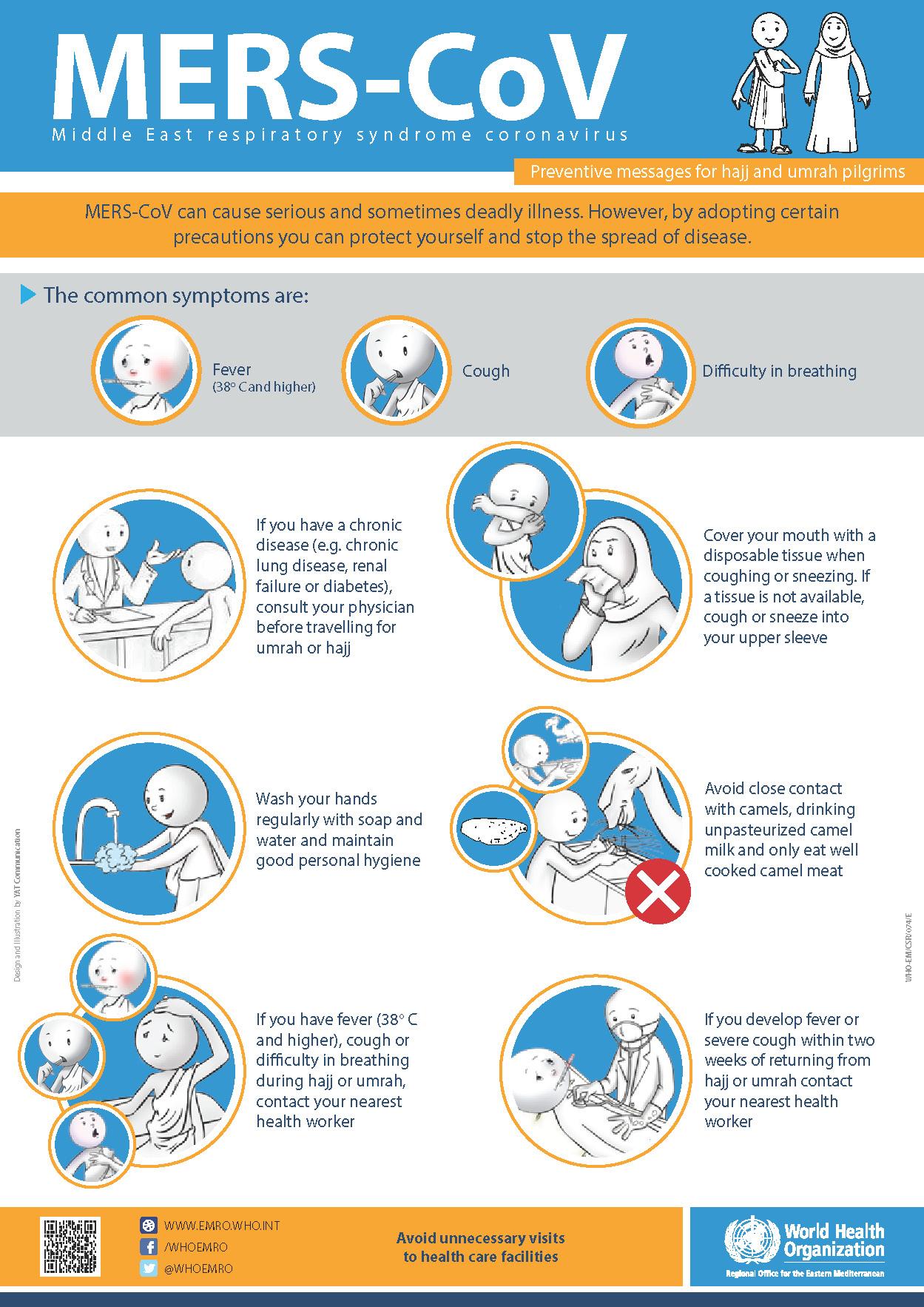
MERS risk reduction and signs of illness to watch for during hajj and umrah...

I love a good infographic and this one ticks a lot of boxes for getting a clear message out about the Middle East respiratory syndrome (MERS) disease and how to avoid catching and spreading the MERS-coronavirus (MERS-CoV).

Thanks World Health Organization.


World Health Organization poster describing risk of infection
 and how to identify when you might have MERS.
Of course, I'd be happier if the poster specifically suggested putting more distance between people and potentially infected camels, rather than just avoiding "close contact".

Granted, close contact can include spending time in the close, but not physically connected, "personal space" of a camel. But "close contact" is, in my opinion, one of those infectious disease terms that needs to be made more simple and clear. Like "aerosol" and "airborne", "close contact" gets a little lost when translated to the people who are at actual risk from infection.

Thursday, September 18, 2014

To the Saudi Arabian Ministry of Health: A request for missing data on retrospective MERS-CoV detections

From: Ian M Mackay

To: The Office of the Minister of Health, Kingdom of Saudi Arabia

I write to humbly ask for your help on a matter of infectious disease communication. I ask that you please consider completing the already near-complete public data picture for all retrospectively confirmed cases of Middle East respiratory syndrome coronavirus (MERS-CoV) that have occurred on your soil. I ask that this be publicly released for analysis, and suitably acceptable citation, by all. The Ministry of Health has already made a number of advances in tracking and communicating new cases of MERS-CoV, addressing criticisms along the way. But there remain some small but epidemiolgically important gaps in an otherwise complete set of data that could be easily closed.

Today, the 19th of September, I make note of the Command and Control Center announcement of the discovery of 19 MERS-CoV cases, identified after retrospective analysis of cases.[1] This adds to the 113 MERS-CoV detections announced 3rd June 2014.[2] I also note the reference to removal of a duplicate case and two false positive cases. In addition to these items, there have been many identified deaths that cannot be linked to publicly announced cases because key date data are no longer published along with the time of death announcements, as they once were (see example [3]).

So I ask if it is possible for you to publish a minimum set of deidentified details from cases that have not been fully described by the World Health Organization Disease Outbreak News reports. I suggest an open access spreadsheet on the CCC website.  I do not ask that any compromising or identifying data be included nor do I believe there is a need for identification of hospital or treatment facility. I would be happy to help identify these cases if that could be of use. 

These data include:

  • Age
  • Sex
  • Date when symptoms began
  • Date of hospital admission
  • Date when a fatal case was first reported (allowing a link to be made)
  • City where case likely acquired

The Command and Control Center website and its updates on contemporary MERS cases have evolved into an essential global asset for many international researchers and for the global public, each of whom are still trying to understand this emerging virus. What I suggest here would add even more reach and value to your efforts to keep us all informed. 

As the custodian of over 90% of MERS case data, the world wholly relies upon your transparency, good will, expertise and willingness to openly share it. I believe a complete set of MERS-CoV data have great potential to engage more researchers from around the globe. These links may help identify new and interesting patterns that could be of use to Saudi Arabia and other Middle East and African nations trying to improve control of MERS-CoV now and in the future.

Thank you for reading this.

Yours sincerely,

Ian M. Mackay, Ph.D.
Virologist
Science communicator
ian.mackay.im (at) gmail.com


  1. http://www.moh.gov.sa/en/CCC/PressReleases/Pages/Statistics-2014-09-18-002.aspx
  2. http://www.moh.gov.sa/en/CCC/PressReleases/Pages/mediastatement-2014-06-03-001.aspx
  3. http://www.moh.gov.sa/en/CCC/PressReleases/Pages/mediastatement-2014-05-24-001.aspx

Sunday, September 14, 2014

Happy 2nd birthday Middle East respiratory syndrome coronavirus (MERS-CoV)...

Its been 2-years since Prof. Ali Mohamed Zaki sent his email to ProMED notifying them of a novel coronavirus. That email was published 20-Sept 2012.[1] 

A year ago we had 138 cases and 58 deaths. Today we have 856 cases with perhaps 306 fatal (36%).

I won't rehash what I said a year ago - I invite you to check that out over at the 1st birthday post.[2]

Suffice to say the past year has been, to my mind anyway, mostly about:

  • Camels
  • High level job "shuffling"
  • Controversial parallel publications
  • Very problematic infection prevention and control issues.
The latter leading to the relatively huge number of MERS-CoV detections and deaths in Saudi Arabia and to some exported detections and cases. The one constant over both years has been that the MERS-CoV is a pitiful spreader among humans. MERS-CoV is nonetheless a virus that is very capable of inducing fatal outcomes, especially among older males with underlying diseases.

Has MERS-CoV gone away? No. Of course it hasn't. MERS has, mostly. That's the disease, not the virus. For now anyway MERS cases are sporadic, although still geographically widespread. 

MERS cases fell to zero cases per week for a number of weeks this year following containment of the Jeddah-2014 outbreak. Nonetheless, this is a virus of camels that seems to  spread, rarely, to humans and when in us, it has not been in any rush to mutate into the pandemic SARS-like threat many once worried about. 

Camels are where this virus likely remains. And there have been no signs that that has in any way changed. The latest information suggests camels have been harbouring MERS-CoV for at least 30-years.[3] This, as with a great deal of the research to date, is knowledge gained mostly thanks to the efforts of international research teams and their funding

So Happy 2nd Birthday you opportunistic, spiky little killer. I'm once again wishing Dr Zaki well and congratulating him on co-parenting the birth of this novel coronavirus. This year I also wish Prof. Ziad Memish well and congratulate him on seeing the infant virus through to toddler age.

Oh, and 2-years on, I still see no sign that the contentious patenting issues were any sort of hindrance to diagnostics or actual research. Just sayin'.

References...

  1. http://www.promedmail.org/direct.php?id=20120920.1302733
  2. Happy 1st birthday Middle East respiratory syndrome coronavirus (MERS-CoV)http://virologydownunder.blogspot.com.au/2013/09/happy-1st-birthday-middle-east.html
  3. MERS Coronavirus Neutralizing Antibodies in Camels, Eastern Africa, 1983–1997
    http://wwwnc.cdc.gov/eid/article/20/12/14-1026_article

Wednesday, August 27, 2014

MERS-CoV around the house-yes, it does transmit at home

Click on graph to enlarge.
Some Middle East respiratory syndrome coronavirus (MERS-CoV) questions remain stubbornly unanswered even after two and a half years.

Today comes a study from Prof Christian Drosten and colleagues, including Prof Ziad Memish, released by the New England Journal of Medicine.[1] This study takes a look at MERS-CoV infection among the contacts of MERS cases.

We already know that asymptomatic or "silent" MERS-CoV infections are not rare. At least 17% of detections of this virus have occurred in people with no overt signs or reported symptoms of disease. That's not to say that they didn't have a slightly raised temperature, headache, sniffle or something very mild that got overlooked or forgotten, but nothing noted or noteworthy. I'd love to see a study on asymptomatic MERS-CoV infected people that looked into fine detail signs and symptoms by the way-that might tell a nice little story about "silent" infections.

This new study looks at the contacts of infected cases from 26 different households, each with a single confirmed MERS-CoV infected case, with MERS. These households provided throat swabs from 280 contacts and antibody test results on at least 1 sample (only 44 permitted a second voluntary blood sample be taken-a shame) from the 280 contacts as well.

Some interesting findings included:

  • Median age of cases (65.4% male) was 55-years
  • Median age of contacts (52% male) was 29-years
  • Cases 7 household contacts (2.5%) were viral RNA-positive (RT-PCR) within 2-weeks of the index patient's illness onset. Similar to what PCR-based studies conducted previously have yielded.
  • 5 household contacts (1.7%) were considered antibody positive after a series of different tests were used. 3 were positive between 2-3 weeks after the index case's onset, and 1 each before or after that period. 
  • some indication that neutralizing antibodies against MERS-CoV might be low level and short lived in mild or asymptomatic infections and that previous antibody studies may have missed some cases if the took blood too long after a mild infection
Overall, 12 (4%) contacts acquired MERS-CoV infection from an index case, across 6 of 26 households (23.1%). 

Among others, one question I'd like answered is whether symptomatic cases being kept in home isolation, which was occurring during the Jeddah-2104 outbreak when they don't need hospital-based supportive care, is the best option for stopping transmission? We don't know whether mild or silent infections can transmit virus, which remains another important question. While 4% seems like a small proportion, it's big enough to perhaps explain some of the sporadic case occurrences. Also, we should be mindful that MERS-CoV infection is associated with the death of a third of the people it infects. I'd want to be pretty sure I wasn't letting a house-bound shedding mild/silent person spread MERS-CoV to a visiting old uncle with a co-morbidity.

References
  1. http://www.nejm.org/doi/full/10.1056/NEJMoa1405858
  2. If this is what MERS-CoV detections look like with more testing...what is the "normal" community level of virus?? [UPDATED]
    http://virologydownunder.blogspot.com.au/2014/04/if-this-is-what-mers-cov-detections.html
  3. Guidelines for home isolation related to MERS Corona Virus infections | May 2014http://www.moh.gov.sa/en/Documents/3-Isolation.pdf

Tuesday, August 5, 2014

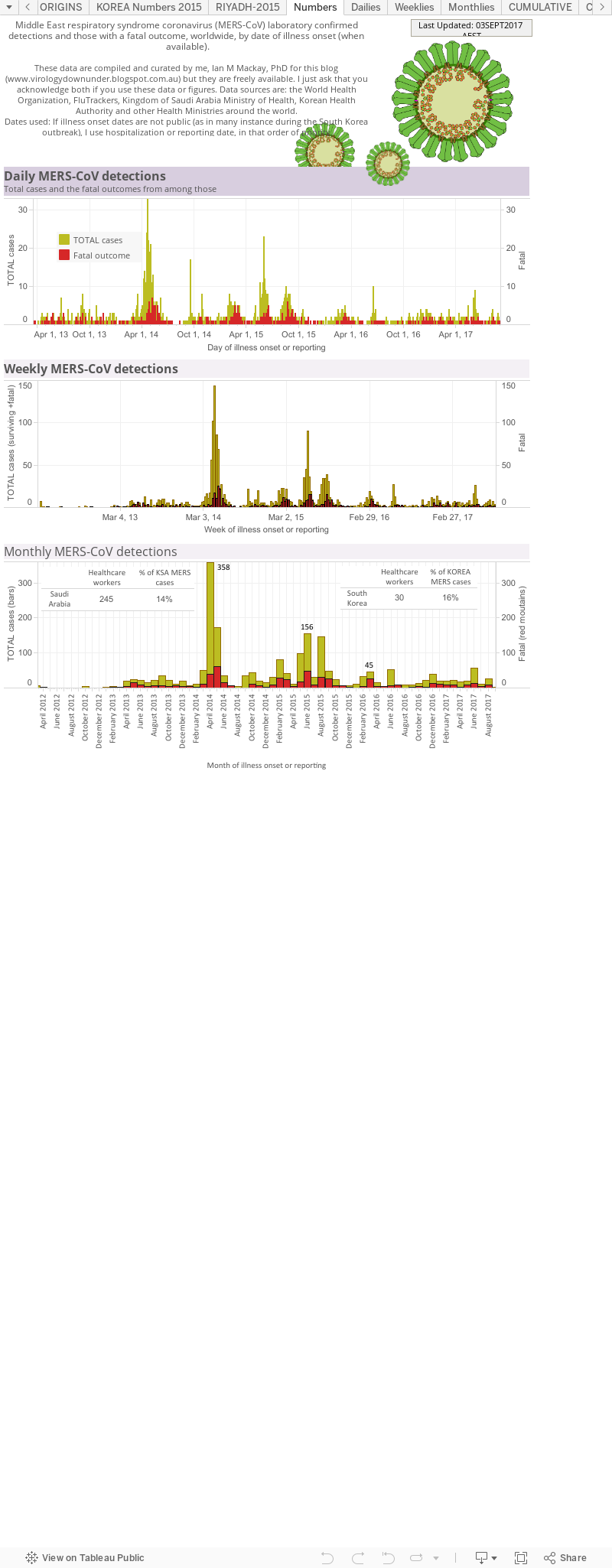
MERS-CoV daily, monthly and cumulative numbers over time...

This is a static page - the internet address won't change, just the charts as new numbers are added. The page will follow Middle East respiratory syndrome coronavirus (MERS-CoV) detections by day, month and the cumulative tallies, worldwide.


Data are derived from the World Health Organization, FluTrackers and various Ministries of Health.
The chart above, as with all on VDU, is made for general interest only. It is also freely available for anyone's use, just cite the page and me please. 

Thursday, July 31, 2014

Virus variability, dopey data and insufficient infection control do not support the theory that bioterrorism is behind the ongoing MERS-CoV outbreak.

A collaborative note from (alphabetically): @influenza_bio, @MackayIM@maiamajumder@neva925@stgoldst@kat_arden

In an unusual twist to the ever-entertaining Middle East respiratory syndrome coronavirus (MERS-CoV) narrative, a new study has been published(1,2) that calls upon us to consider seriously, or at least acknowledge, the possibility that bioterrorism explains the emergence of this virus as a rare but often deadly human pathogen. Dr Raina MacIntyre (@RainaMacIntyre) of the University of New South Wales suggests that "deliberate release" may explain the allegedly paradoxical pattern of ongoing MERS-CoV infections in Saudi Arabia. She concluded this after comparing MERS-CoV numbers to the 2003 epidemic of severe acute respiratory syndrome coronavirus (SARS-CoV).(3) Apparently, the elephant in the room that we may all be overlooking is the possibility that the virus is being or has been released deliberately in repeated acts of bioterrorism.

“Bioterrorism” is inherently an evocative and emotive word; it has the ability to elicit the sort of worry and fear among the wider community generated by the likes of “Ebola” and “deadly airborne virus”. It also feeds conspiracy theories.

In our collective opinion, bioterrorism, with respect to MERS-CoV and otherwise, should not be invoked without at least some preliminary data that point specifically to a deliberate human cause. 

We would like to make it clear that we don't object to considering bioterrorism as a potential cause of the emergence of MERS-CoV. It is always worth considering whether an outbreak of any human, animal or plant disease is due to deliberate human activity. Thankfully, there are people whose jobs are to do just that. 

However, we have some concerns about the rationale put forth in Dr. MacIntyre's paper regarding why bioterrorism may explain sporadic MERS-CoV infections better than nature and would like to highlight some notable factual errors and omissions that might have influenced her conclusions. No data are available that could decisively rule out the possibility of bioterrorism as the cause of the ongoing MERS-CoV outbreak, as one cannot prove a negative. Nonetheless, we believe that Dr. MacIntyre's arguments are flawed and that the available evidence cannot be used to support her theory. Substantial scientific and methodological problems exist in Dr MacIntyre’s paper that undermine her deliberate release theory. Here, we discuss some of these issues, and we offer perspective on why bioterrorism is unlikely to be a cause of human or animal MERS-CoV infections.

MERS is different to SARS. Yep. We already knew that.

A substantial amount of Dr MacIntyre’s report is based on comparing MERS to SARS.(4) MERS-CoV and SARS-CoV are genetically, taxonomically and phylogenetically divergent, and MERS and SARS are immunobiologically, clinically and pathologically distinct. Furthermore, their transmissibility in humans, their environmental contexts, their animal hosts and the interactions between their animal hosts and humans are different. Thus, the comparison between the two viruses must, a priori, result in finding MERS and SARS outbreaks to be characteristically different. That SARS and MERS are different has also been stated previously.(5,6) Compared to SARS, MERS generally progresses more rapidly and occurs more frequently in individuals with pre-existing medical conditions, including diabetes, chronic lung disease, renal failure and in people who are immunocompromised. Moreover, MERS-CoV exhibits a broader tissue tropism and induces faster cellular damage than SARS-CoV; it also employs a completely different receptor and prompts a comparatively delayed cellular immune response. These two viruses belong to separate lineages within the genus Betacoronavirus; they are chalk and cheese.

Moreover, from an epidemiological viewpoint, it is extremely important to note that human cases of infection with these two viruses have never geographically overlapped. This is no small fact. The population of Saudi Arabia seems to have an unusually high proportion of older males (Fig 1) with pre-existing medical conditions; from the data that are currently available, this particular group also appears to be most vulnerable to fatal outcomes. Outside this population, MERS-CoV infections seem to be far less frequently associated with severe disease and death.
 
Figure 1. Older males represent a greater proportion of MERS cases and even more of the deaths attributed to infection with MERS-CoV.

Perhaps most salient to this discussion is that MERS-CoV does not transmit in humans as well as SARS-CoV did. In fact, MERS-CoV transmits quite poorly between humans unless a perfect storm of pre-existing medical conditions and poor infection prevention and control in a healthcare setting, and perhaps the right environmental factors, occur. 
Dr. MacIntyre compared epidemic curves for SARS and MERS to show that, aside from this year’s March/April hospital outbreaks, the appearance of new MERS cases doesn't follow the same pattern that new SARS cases did. Namely, new MERS cases have continued to appear at a trickle, up until a few weeks ago, whereas SARS disappeared entirely once human-to-human transmission was stopped. One explanation for this is that the Arabian Peninsula has a lot more domesticated camels, which are believed to be the primary host reservoir for MERS-C0V, than China has captive civet cats, which serve as an intermediate host transmitting SARS-CoV from bats to humans. For this and other reasons, there may be a far greater number of opportunities for repeated zoonotic transmission of MERS-CoV than there was for SARS-CoV. In support of this idea, it has been found that those who work with camels are at greater risk of acquiring MERS-CoV than are those who do not.(7) 

In short, MERS-CoV is barely contagious among humans but highly zoonotic, and SARS is highly contagious among humans but barely zoonotic.

All of these considerations are reasons to dissuade one from expecting much overlap between the epidemiology of SARS and that of MERS.   

Dr. MacIntyre's arguments that some features of the MERS outbreak may be specific to the repeated, deliberate release of MERS-CoV are not supported by evidence.

Dr. MacIntyre states that the ongoing MERS outbreak appears to involve "sporadic ongoing infections from a non-human source." We agree, with the caveat that such infections represent a minority of cases; most cases have resulted from short human-to-human transmission chains in healthcare settings.8 Dr. MacIntyre further states that, "Possible sources of ongoing sporadic infection in humans include animals (camels appear the most likely source), or deliberate release." However, she argues that the epidemiological data may be more easily explained by deliberate release than by infections acquired from animal (camel) sources.

The main features of MERS-CoV infections that are suggested in Table 1 of Dr. MacIntyre's paper to distinguish between deliberate and natural infections are the following:

   In support of deliberate release, but not natural infections:
  1. "Evidence of multiple introductions in a single outbreak."
  2. Possibly, "Several cases with no link to human OR zoonotic source."
  3. Possibly, "Multiple genetic strains in a single hospital outbreak at Al Ahsa Hospital."
   In support of natural infections, but not deliberate release:
  1. "MERS-CoV identified in camels."
Below, we respond to each of the features of the ongoing MERS-CoV outbreak that Dr. MacIntyre has suggested provide evidence in favor of deliberate release.

  1. MERS is repeatedly introduced into the human population, most likely because humans are repeatedly exposed to animal sources of the virus.
    While we have yet to see seroprevalence data (though we have on good authority that community seroprevalence is low and a detailed report on the matter will be released soon), no evidence of high population prevalence exists. So far, cases have been sporadic without prolonged chains of human-to-human transmission. Healthcare settings, especially hospitals, have served as both amplifier and nexus for human-to-human spread; approximately 75% of the surge of cases in Saudi Arabia during March-May 2014 are thought to have resulted from human-to-human transmission, primarily in these settings.(9) In fact, many cases initially thought to have been primary, zoonotic cases have subsequently been linked to exposures to confirmed human cases.(8) Also, more than 25% of all cases have been healthcare workers, highlighting the extent of nosocomial (hospital-related) transmission.(8) Moreover, despite Dr MacIntyre’s assertions, a substantial proportion of cases have been mild. Between a quarter (of detections worldwide) and a third (of 113 previously unreported cases announced by the KSA Ministry of Health in early June 2014) were asymptomatic, i.e., they had no notable signs or symptoms of illness.

    However, until a pause this July, new MERS cases have been detected almost continuously at low levels over the past year or more. Aside from outbreaks in healthcare settings, these cases are thought to be by and large primary, zoonotic cases, i.e., caught from an animal source, most likely related to camels. Thus, we agree with Dr. MacIntyre that many MERS cases are likely due to multiple introductions into humans; however, we disagree with the idea that this points more to bioterrorism than to an animal source. Instead, we believe that multiple introductions into humans more likely reflect ongoing exposures to infected animals or contaminated animal products; a lot of camels live in and are also imported into the Arabian Peninsula. It is important to note that multiple introductions into humans have also been observed with other zoonotic pathogens as well, including highly pathogenic avian influenza A (H5N1) virus(10) and avian influenza A (H7N9) virus.(11) Existing health conditions have an impact on disease outcomes in such other zoonotic diseases, too. Repeated introductions of a virus into a human population are not unique to bioterrorism; nature does a very good job of creating confounding epidemiological conundrums that are often made worse by inadequate human responses.
  2. We don't know of a source of exposure for a proportion of MERS cases, but that's probably just because we don't have perfect information.
    Small numbers of sporadic cases have been reported for which no contact with other confirmed cases or animals is known. Dr. MacIntyre suggests that the simplest explanation for these cases may be bioterrorism. In our opinion, however, these cases may be explained most simply by the pervasiveness of incomplete case histories, and occasionally by contact with undiagnosed cases, rather than by the deliberate release, past or ongoing, of pathogens into the environment. Moreover, patients or their relatives may not be aware of all relevant interactions with animals or animal products, and we also may not be asking the right questions about those interactions. We will simply never know about all relevant contacts for every infected person; we never really do for any viral outbreak. MERS is a fairly new disease, and even the experts are unclear about how MERS-CoV is transmitted from camels to humans or even from humans to humans, for that matter. Let's figure out the basics before we say that bioterrorism is a more likely cause than nature.
  3. Genetic variability among different human MERS-CoV variants is small and probably results from natural variability in MERS-CoV; viruses are naturally diverse.
    The fact that multiple MERS-CoV strains were detected in a single outbreak at Al-Ahsa Hospital suggests only that the outbreak resulted from human-to-human transmission of virus introduced via multiple zoonotic events that exhibited some expected genetic variability. Such multiple introductions have been documented and explained already.(12) While it’s possible (though unlikely) that several viral variants were deliberately released, nature is quite capable of doing this without human help.

    Genetic variation among MERS-CoV isolates has indeed been detected in Saudi Arabia. However, the changes have affected <2% of the entire genome, a degree of variation that is not uncommon within other endemic human coronaviruses. Virus variation can also occur among MERS-CoV strains passaged through cells in culture, indicating that virus-driven adaptive changes are not unusual in this virus under a variety of host and growth conditions. Furthermore, the genotypes found in both camels and humans throughout the Arabian Peninsula have generally been no more or less divergent than what we’ve seen in Saudi Arabia thus far. The exception is a strain found in a camel in Egypt that had been imported from Sudan or Ethiopia;(13) this strain is notably more divergent and may hint at an as yet untapped source of variation to be found in geographically dispersed cousins of the Saudi viruses.  Genetic variability occurs naturally among viruses, including zoonotic viruses,(14) and is not a hallmark of bioterrorism.
There are better ways to explain the unusual features of the observed epidemiology of MERS-CoV.

Dr. MacIntyre states, "The continued increase in cases in KSA in 2014, without satellite epidemics in other countries, and without consistent animal contact in all cases is inexplicable." These observations are not inexplicable for a virus that transmits poorly. We argue that satellite epidemics have not been observed simply because secondary, human-to-human spread of MERS-CoV is rare and is, moreover, most likely attributable to a small percentage of cases. We have seen evidence for such inefficient transmission in almost every exported MERS case to date. People sitting next to a confirmed case during tours and on planes have not become ill; nor have they tested positive for MERS-CoV. Apart from weaknesses in the virus and environmental factors (e.g. temperature, humidity, outside camel birthing season), good infection prevention and control may also play a role in limiting spread. 

Dr MacIntyre suggests, further, that, “If the large recent increase in cases in KSA is due largely to person-to-person transmission, other similar increases (satellite epidemics) would be expected in other countries.” However, even though satellite epidemics have not occurred, it is a fact that most cases in the spring in the KSA were due to human-to-human transmission. The healthcare-related outbreak in Jeddah was tied to location-specific failures of infection prevention and control, as the World Health Organization (WHO) has pointed out.(8,15)

As for cases "without consistent animal contact," we hope that Dr. MacIntyre is not expecting proof of animal contact for every case, but rather for suspected primary cases only. As discussed above, most cases have reportedly resulted from human-to-human transmission, and the rest are probably accounted for by incomplete medical case histories and overlooked contacts with an undiagnosed case or infected camel source. Alas, for some primary cases, we simply do not have enough information yet.

The epidemiological data used by Dr MacIntyre, courtesy of the Saudi Arabian Ministry of Health and the WHO, are imperfect. Those of us maintaining MERS-CoV detection line listings are painfully aware of the limitations associated with these data and their communication. Reporting formats have changed repeatedly, resulting in inconsistent case histories. Testing delays, reporting gaps, incomplete case information and translation errors are but a handful of issues that must be considered and controlled for when using these data to improve our understanding of MERS epidemiology.

Yes, there have been seemingly incongruous pauses in case announcements during periods of mass gatherings – times when we might expect detections of a respiratory virus to be on the rise. Yes, it appears, from the data alone, that only a handful of cases have reported animal contact, despite the fact that about 25% of human cases have been zoonotic, according to the WHO.(9) Yes, countries with cases outside Saudi Arabia more often report contact with camels. However, these “paradoxes and inconsistencies” are far more likely due to incomplete and inconsistent data collection and reporting than to a “deliberate release” of MERS-CoV as a putative category C bioterrorism agent.

How likely is it that MERS-CoV is a cultured pathogen deliberately released by bioterrorists?

The likelihood that MERS-CoV was deliberately released in Saudi Arabia is vanishingly small, and Dr MacIntyre’s article fails to provide any sound scientific basis to convince us otherwise. Each of the features of the ongoing MERS-CoV outbreak that she has put forth as an indicator of deliberate release can also occur naturally. In addition to the issues discussed above, Dr MacIntyre offered no explanation to describe a mechanism by which MERS-CoV could have been weaponized; however, given what we do know about MERS-CoV, purposeful weaponization seems highly improbable. Thus, while it is worth considering whether any disease outbreak has a deliberate human cause, Dr. MacIntyre's paper provides no evidence that supports bioterrorism as a cause of MERS. Instead, an abundance of evidence suggests that MERS results from natural causes.

MERS-CoV is known to infect dromedary camels across the Arabian Peninsula and Africa; we likely know of only a fraction of its geographic range in the latter. Moreover, the virus has been in these animals for at least 20 years. As we continue to learn, it’s looking more and more like an ancestor of MERS-CoV first emerged in bats, potentially in Africa.(16,17) If the virus did spill over from bats to camels at some point, it remains unknown when or how, as does the scope of how many other animals carry some version of MERS-CoV-like viruses. 

So, does any of this mean that a deliberately engineered form of the bat virus was purposefully released into camels more than two decades ago? Could it have been a (very poorly functioning) bioweapon intended for use against camels? Who would have created such a weapon? Or, was such a virus potentially introduced into humans first and we’ve been the source of camel infections ever since? Due to the large genome sizes of coronaviruses (the largest among all RNA viruses), reverse genetics systems, used for “made-to-order virus” construction, are quite cumbersome and demanding; only a handful of labs are known to be proficient with these systems. These significant technical requirements provide further evidence against the possibility that MERS-CoV has been used as a bioweapon.

Dr. MacIntyre states that, “when a new infectious disease emerges, bioterrorism, unless it is caused by an eradicated disease such as smallpox, may not be easily recognized for what it is unless we consider the possibility.” This, however, is not supported by the last decade of research and development, undertaken across the world, towards the goal of preventing, detecting, and mitigating the effects of bioterror. Since 2001, considerable resources have been invested in preparing for bioterrorism. This has led to the deliberate and explicit “securitization” of public health and medicine, with a focus on conceiving the potential for human-caused disease outbreaks.(18) The focus on man-made viruses and the potential for bioterror is a multibillion dollar enterprise;(19) if the status of MERS-CoV as an intentional release  agent were plausible, it would provide rare vindication for such efforts. That it has not is not for want of attention on the behalf of policymakers around the globe.

It is also worthwhile to reflect on the reasons one might release a pathogen and how the ultimate goals of any purported bioterrorist might inform their release strategy. The two iconic instances of bioterror—separate from biological warfare—in the twentieth century were the use of Salmonella enterica by the Bagwan Shree Rajneesh cult in Oregon in 1984 and the 2001 anthrax attacks.20 In both, a bacterium was used with very specific goals: the attempted manipulation of a local election and the targeting of US public service institutions. 

A poorly transmitting coronavirus, however, could not be targeted as well as the pathogens used in the above cases. It isn’t an ideal agent for more common attempts to use pathogens as weapons, either, such as the failed attempts to weaponize anthrax and the botulinum toxin by the Aum Shinrikyo doomsday cult.(20) Rather, MERS-CoV occupies a biological limbo in which its effects are too intermittent for it to be a targeted agent, but nowhere near prolific enough to be a means of generating widespread bioterror. If MERS-CoV were to be—counterfactually—a bioterror agent, then its creators would have surely failed at their task. 

We don’t see too many new diseases; there are only so many ways a pathogen can make us sick. In this sense, MERS is not really clinically distinct, and certainly nothing about MERS can be pointed out as pathognomonic; however, there still remains much to learn about the epidemiology, clinical course and virology of the disease. This is quite commonly the case, even two years after the discovery of a new viral species. By all means, investigators should consider all potential causes of outbreaks of new human pathogens, even bioterrorism. However, in the case of MERS, while detailed laboratory, epidemiological and clinical studies are absent or found wanting, the publicly available data that exist are consistent with a natural origin for the outbreak. The simplest explanations are likely still the best; in this case, when we hear hoof beats, we shout camel, not bioterrorist.

References.
  1. MacIntyre, C.R. The discrepant epidemiology of Middle East respiratory syndrome coronavirus (MERS-CoV).
    http://link.springer.com/article/10.1007/s10669-014-9506-5/fulltext.html
  2. https://storify.com/MackayIM/evoking-bioterrorism-as-a-cause-of-sporadic-mers-i/edit 
  3. http://www.who.int/ith/diseases/sars/en/ 
  4. SARS and MERS are the diseases associated with SARS-CoV and MERS-CoV infections, respectively.
  5. http://www.cdc.gov/coronavirus/mers/faq.html
  6. http://www.who.int/csr/disease/coronavirus_infections/MERS_CoV_RA_20140613.pdf?ua=1
  7. http://www.who.int/csr/disease/coronavirus_infections/MERS-CoV_summary_update_20140611.pdf?ua=1
  8. http://www.who.int/csr/disease/coronavirus_infections/MERS_CoV_RA_20140424.pdf?ua=1 
  9. http://www.reuters.com/article/2014/05/14/health-mers-meeting-idUSL6N0O03TQ20140514
  10. http://www.who.int/influenza/human_animal_interface/H5N1_cumulative_table_archives/en/
  11. http://www.who.int/influenza/human_animal_interface/influenza_h7n9/Data_Reports/en/
  12. http://www.ncbi.nlm.nih.gov/pmc/articles/PMC3898949/
  13. http://wwwnc.cdc.gov/eid/article/20/6/14-0299_article
  14. http://www.ncbi.nlm.nih.gov/pubmed/24457975
  15. http://www.ncbi.nlm.nih.gov/pubmed/23891403
  16. Corman VM, Ithete NL, Richards LR, Schoeman MC, Preiser W, Drosten C, Drexler, JF. Rooting the phylogenetic tree of MERS-CoV by characterization of a conspecific virus from an African bat. J Virol. 2014 Jul 16. http://jvi.asm.org/content/early/2014/07/10/JVI.01498-14.abstract
  17. Yang L, Wu Z, Ren X, Yang F, Zhang J, He G, et al. MERS–related betacoronavirus in Vespertilio superans bats, China [letter]. Emerg Infect Dis. 2014 July. http://wwwnc.cdc.gov/eid/article/20/7/14-0318_article
  18. Fidler, David P, and Lawrence Ogalthorpe Gostin. 2008. Biosecurity in the Global Age. Stanford University Press. 
  19. Elbe, Stefan, Anne Roemer-Mahler, and Christopher Long. 2014. “Social Science & Medicine.” Social Science & Medicine, May. Elsevier Ltd, 1–9. doi:10.1016/j.socscimed.2014.04.035.
  20. Wheelis, Mark, and Lajos Rózsa. 2009. Deadly Cultures. Harvard University Press.

Ain't no thing like MERS-CoV, 'cept MERS-CoV...

Probably little obscure if you haven't been fanatically watching every Guardians of the Galaxy Trailer for the past year and a half-but I guess I just like to make you work for it.

What follows tonight (my time) are some further additions to what has become the saga of whether the Middle East respiratory syndrome coronavirus (MERS-CoV) is not a naturally circulating virus, but in fact an engineered or cultured weapon of (very ineffectual) terror?

Not sure if you can guess but I'm in the natural camp.

Last week (was it just last Friday?) I learned of a paper by Professor Raina MacIntyre published in Environment Systems and Decisions.(1) This was thanks to having butted in on a Twitter conversation between Alexandra PhelanMaia Majumder and Stephen Goldstein. In this paper there was the suggestion that MERS-CoV was deliberately released. This possibility was concluded after applying a risk analysis approach to publicly available data with an aim to "shift the paradigms of thinking about emerging infectious diseases". One of the articles search keywords is Bioterrorism.

A conclusion of s was that "When a new infectious disease emerges, bioterrorism, unless it is caused by an eradicated disease such as smallpox, may not be easily recognized for what it is unless we consider the possibility." Dr McIntyre also wrote a piece for the Conversation (3), multiple pieces for her facebook page (4) and one for the School of Public Health and Community Medicine UNSW.(5) On Twitter, Dr MacIntyre noted...
We aired our surprise about this, as did some others, and things got misquoted...

...and then took a turn away from seeking answers...
For a list of all the Tweets (I believe), please check out my Storify timeline.(2)

So, to share our concerns, we wrote, with the oversight of an expert Editor, a 900-word piece also for the Conversation.(4) Check out its comments for added detail too.

We also wrote a longer piece for this blog, which will follow in the next post.

References...
  1. The discrepant epidemiology of Middle East respiratory syndrome coronavirus (MERS-CoV). http://link.springer.com/article/10.1007/s10669-014-9506-5/fulltext.html#Sec3
  2. A Storify timline of our exchange about the paper in 1.
    https://storify.com/MackayIM/evoking-bioterrorism-as-a-cause-of-sporadic-mers-i
  3. https://theconversation.com/mers-coronavirus-animal-source-or-deliberate-release-29690
  4. https://www.facebook.com/ProfRainaMacIntyre
  5. https://www.facebook.com/sphcmunsw/posts/269065343283155

Tuesday, July 29, 2014

Where has all the MERS-CoV action been...?

Sorry but no prizes to be awarded here.

...the Kingdom of Saudi Arabia is where nearly 90% of all laboratory-confirmed detections of the Middle East respiratory syndrome coronavirus (MERS-CoV) have originated from, as best we can tell. 

This is based on data sourced from the World Health Organization, various Ministries of Health around the world, FluTrackers and the scientific literature. All public data sources. 

While the tally sits around 847 cases and 291 deaths, right now we are experiencing a multi-week lull in new case announcements. Great news for the region and the world, which is dealing with many assaults, biological and otherwise, right now.

Where the wild MERS-CoVs are.
Click on chart to enlarge.

Thursday, July 17, 2014

Middle East respiratory syndrome coronavirus (MERS-CoV): Age and Sex

A new static page on which I will update the MERS-CoV numbers as they relate to the age and sex of the people laboratory confirmed as infected.


Tuesday, July 15, 2014

Middle East respiratory syndrome coronavirus (MERS-CoV) by week and month...

To follow up yesterday's daily numbers chart, here we have the number of MERS-CoV detections by week (Chart 1) and by month (Chart 2). 

Not a lot of change from my last posts of these 18-June and 23-June - we are currently in our 5th straight day without any new detections being reported - and prior to this drought, there had been very few other detections for a while so we can now very clearly see the Jeddah-2014 (Kingdom of Saudi Arabia) major hospital-base outbreak peak's beginning and end.

We're also in the second half of Ramadan, putting us past the maximum likely incubation period for those visitors to the holy places that may have acquired MERS-CoV infection at the beginning go the month. A pretty good indication that MERS-CoV is not spreading among the community. It is still strange to me that a region that was yielding sporadic cases up until very recently, is now not yielding any such cases. Perhaps it's the improvements initiated under Dr Fakeih's watch, or maybe the hot, dry weather? It could be that camel contacts are reduced or that festivals are not as frequent in the extreme heat.  It would be great to see some scientific literature emerge on the Jeddah-2104 outbreak, on seroprevalence, on camel testing, gene/genome sequencing, studies of other animals or transmission investigations. Things have been very quiet on the publication front for some time now and we still know very little detail about the largest flurry of (known) cases to have occurred since 2012.

We'll wait and watch and see, I suppose.

MERS-CoV detections, worldwide (but mostly in the Kingdom of Saudi Arabia), by week.
Click on chart to enlarge.


MERS-CoV detections, worldwide (but mostly in the Kingdom of Saudi Arabia), by month.
Note the yellow star which highlights a 10-fold higher scale for 2014 y-axis (left-hand side) than in the 2013 numbers. Even 2014's puny June surpassed any month in 2013.
Click on chart to enlarge.

Monday, July 14, 2014

Middle East respiratory syndrome coronavirus (MERS-CoV) daily numbers...

Because I miss my charts, this is a quick one, made the old fashioned way (Excel and Adobe Illustrator).
MERS-CoV detections by date of illness onset (orange; when available, otherwise date of hospitalization or reporting) or by reporting date only (blue), each day since 22-March-2014. 
Click on image to enlarge.
A few things to note from this chart:

  • I've arbitrarily chosen to bracket the Jeddah-2014 outbreak as starting in the week beginning 17-March-2014 (MERS Week #106) and ending in the week beginning 19-May-2014 (MERS Week #114). There don't seem to be Jeddah-originating cases in the week after that, and case numbers are low (<5/day, similar to the same period in 2013) from then onwards...although this is not an exact science. For example, does one count those cases from the Al Qunfudah cluster that were moved to Jeddah hospitals? But it's a guide.
  • This chart has the daily case numbers (orange) based mostly on the date of illness onset. This highlights (again) the ongoing paucity of recent MERS-CoV detections which is great news for the Kingdom of Saudi Arabia (KSA). The map below previously posted here, does highlight an interesting questions. How are the small number of cases reported in June/July so widespread and where are the infections being acquired from? It's not spring (the camel calving hypothesis suggests human cases take off during the active birthing period; perhaps this is just the "ticking over", non-Spring norm for animal>>human acquisitions?) and there are no hospital outbreaks. Is this community spread? All the indicators we have point away from that. It is also a very busy time in the KSA right now with Ramadan having attracted visitors for some weeks. We have not yet seen cases appearing among those with underlying illness, an indicator or sentinel population for MERS outbreaks because they show the more obvious result of an infection. So these cases must be ongoing sporadic camel (or other animal, including goats which appeared in the recent WHO disease outbreak news) to human acquisition. Right? I'm looking forward to some widespread camel testing results from the KSA and some human seroprevalence studies would be very relevant too. Not sure what's taking so long for the latter to appear.
  • The plot of detection based on date of reporting (blue) is somewhat messed up by the found113 detections for which we have no date breakdown (see here for more detail or search VDU for found113). This means the detection all get assigned into 3-June, the date the KSA Ministry announced them. Yuck. It looks like those details are never going to materialize either. At least, my personal efforts to get date data from Prof Tariq Madani have failed, despite his public assurance that more detailed data could be made available to scientists who wanted it, and the WHO seem to have moved on to posting more contemporary cases in detail, skipping over the same level of detail for the found113.
The very good news is that Ramadan has not coughed up a plague of new MERS cases. The bad news is, we still don't really know the source of the cases that have been continuing to emerge in the KSA. Without knowing that we really don't have a handle on this disease, or this virus, at all.

Location of June/July MERS-CoV detections in the KSA.
Click on map to enlarge.

Monday, July 7, 2014

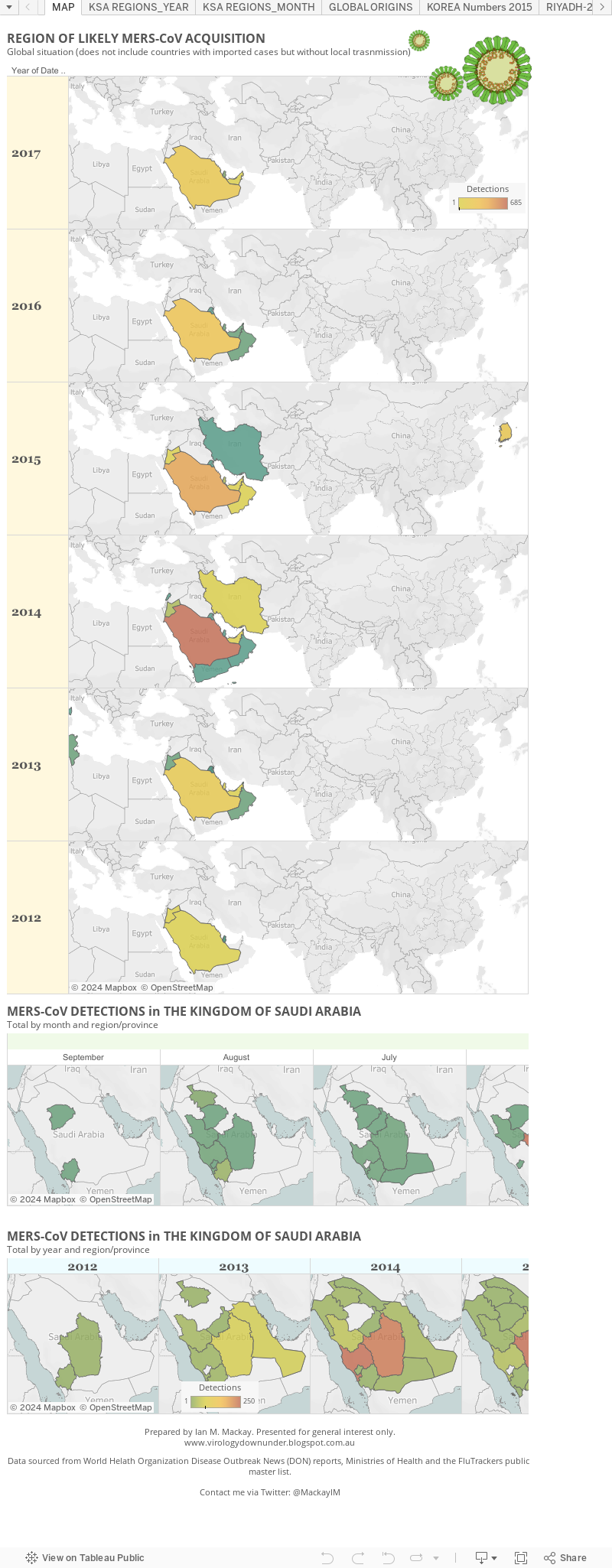
Mucking about with MERS and maps...

Yes, some more of that stuff with the Tableau presentation stuff.

This one shows the MERS-CoV cases on a map by the region they were most likely acquired in. So that means it doesn't show all the site to which cases arrived via export, just their likeliest point of origin.

Because we have no individual case details about the 113 "found" Saudi Arabian cases from 3-June, I've taken some liberties using the hints provided by the World Health Organization to put this figure together. It will be a little out on the (29) of the found113 that occurred between 5 May 2013 and 28 February 2014 but its the best I can manage with that big data gap.


Wednesday, June 25, 2014

Are MERS cases in Saudi Arabia and the UAE linked to camel imports?

Special Guest writer: @influenza_bio


Looking at the history of MERS coronavirus infections to date, many puzzling questions come to mind.

Evidence of MERS infection has been detected in dromedary camels from Spain to Egypt to the Arabian Peninsula. Why have we seen human cases arise only in a handful of countries in the Arabian Peninsula?

Why have nearly all MERS cases originated in Saudi Arabia (KSA)?

As of June 22, 2014, 718 cases are thought to have been contracted in KSA. The UAE, a distant second, has had 69 cases. Jordan has had 17; Qatar has had 9 (although 1 had a travel history to KSA), Kuwait 3, Oman 2 and Yemen 1. All of these countries have a lot of camels.


  • Has KSA had more cases just because its population is larger? Have other countries had just as many cases, per capita?
No.

Figure 1. MERS cases per capita (2012 data)
  • Is it just an accident that cases have appeared primarily in KSA, followed by the UAE?

    It could be.


    • Is it an artifact of surveillance that most cases have appeared in KSA, followed by the UAE? Are KSA and the UAE just better at detecting MERS cases?

      This would seem unlikely. It's certainly possible that all countries with MERS have missed some to a lot of cases, especially milder ones, and that some countries are better at detecting MERS cases than others. However, the fact that all cases detected outside the Arabian Peninsula also follow the same general pattern of country of origin suggests that we probably have the big picture at least close to right.


    • Have KSA and the UAE had more cases because they have more camels or more camels per person?
      No. First of all, these countries don't have the biggest domestic camel stocks in the region. Second, when you look at the number of MERS cases as a function of the size of domestic camel stocks (not including imported camels, which are typically slaughtered), there is no relationship.


      Figure 2. MERS cases as a function of the size of domestic camel stocks, not including imported camels (2012 FAO data[1])

      Alternatively, when you look at the number of MERS cases per capita as a function of the number of camels per capita (again, considering only domestic camel stocks, not imported camels), there is also no relationship. KSA and the UAE also do not have the greatest numbers of camels per person in the region.


      Figure 3. MERS cases per capita (2012 data) as a function of the number of 
      camels per capita (domestic camel stocks only; 2012 FAO data[1])

      • Are there more camels with MERS in KSA and, to a lesser extent, the UAE?

        We have no idea, as there has been almost no camel surveillance. But hopefully new surveillance and studies underway in KSA and the UAE will help us to understand the situation in camels in these countries better.


        • Is the large number of cases in KSA due only to nosocomial transmission (i.e., transmission in health care settings)?

          Not really, even though a very large proportion of its cases have been nosocomial. Many of the cases that KSA has had are from April and May 2014 and were in Jeddah, and the WHO has published an estimate that 75% of the cases arising in KSA in April-May 2014 may have resulted from nosocomial transmission.[2] Subsequently, the WHO wrote that, "Approximately one-third of these Jeddah cases are considered to be primary cases, although investigations are currently ongoing to determine whether these patients had contact with another confirmed case."[3] In other words, the WHO may end up revising the 75% nosocomial estimate upwards. Looking at graphs of MERS cases over time[4] suggests that cases may dip a bit in the winter and surge a bit in the spring, although MERS hasn't been around long enough in humans to know this for certain. Depending on the final WHO estimate for the rate of nosocomial transmission in April and May, anywhere from the "expected" number of zoonotic cases (i.e., the average monthly rate before April 2014) to almost double this number (if 75% of cases were nosocomial) may have appeared in April and May. However, even if it turns out that zoonotic cases have appeared in KSA at a more or less steady rate over time, this large amount of nosocomial transmission still wouldn't explain why most zoonotic cases are in KSA. Moreover, it would not seem likely that the effectiveness of infection control and prevention is vastly different across the Arabian Peninsula, and, in fact, there is evidence of nosocomial transmission in KSA, the UAE and Jordan, the countries with the most cases. However, it is puzzling that nosocomial transmission has seemed to peak in the spring of both 2013 and 2014 in many different settings; some environmental factor, analogous to winter for the flu, may be at work here.


          • Are there environmental factors in KSA more conducive to infection with MERS, especially around April and May (when we have seen a large number of infections this year, and to a far lesser extent, last year)?

            As mentioned above, there may be something special about spring. It is also possible that something about KSA and the UAE are particularly conducive to human infec
            tion with MERS.


            • Is anything else going on?

              There are probably many other factors at work that we don't know about. For one thing, we still do not know how MERS is transmitted to humans – whether it is transmitted by camel kisses, milk, urine or meat, among other possibilities, for instance. Once we know the routes of transmission and have some estimates of how much each route contributes to the numbers of infections, then we may have a better chance of teasing out even more differences across countries. Yet other factors may be at work, as well.


              Is the number of MERS cases in a country related to the number of camels it imports?

              At this point I would like to introduce a very speculative hypothesis: that the number of MERS cases in countries of the Arabian Peninsula is related to the number of camels that are imported into those countries. Significant oil wealth in some of these countries has fueled a greater demand for meat over time, and in particular, camel meat. Over recent years, this demand has been met by slaughtering primarily imported camels. 


              • KSA and the UAE are the dominant importers in the region.

                KSA imports the most camels in the region, followed by the UAE. No other country in the region comes close.

              Figure 4. Camel imports in 2011 (FAO data[5])


              • Camel imports to KSA and the UAE have been increasing dramatically over the past few years, and the dominant sources of these imports are ports in the Horn of Africa.

                It is difficult to find hard numbers on the numbers of camels imported into KSA or the UAE broken down by country of origin. Also, the most recent FAO import data is from 2011. However, in the absence of access to recent export and import data from a variety of governments, a combination of FAO import data, FAO export data and news reports over the past few years paints a picture of vast and vastly increasing camel exports from northeastern Africa into primarily Saudi Arabia.


                First of all, it should be noted that, according to the FAO,[1] Somalia had 7,000,000 camels in 2012 and Ethiopia had 915,518, while KSA had 260,000. Sudan also had 4,571,000 camels.


                On November 25, 2013, the Financial Times reported in an article entitled, "Somali meat exports to Saudi Arabia soar,"[6] that, 
              "Including goats, cattle and camels, total livestock exports from the civil war afflicted territories rose to 4.8m in what is the world’s largest on-the-hoof movement in the live animal trade. 
              “There’s no single time that they ever exported such large numbers before,” says Ernest Njoroge, livestock expert at the EU's Somalia Unit. “If the ports in Berbera, Bosaso and Mogadishu become very, very efficient, then that will even increase.
              “A lot of Ethiopian livestock is also coming through Berbera. It’s a very big market for us and it’s time for us to increase the capacity of Berbera port,” says Mr Yonis, who hopes planned investments will deliver a terminal dedicated to livestock for export to the Middle East."
              A recent article by National Geographic[7] examines the huge and growing livestock trade from, in particular, Somaliland, and notes that, "While livestock—including cattle and camels—are exported year-round from Somaliland, the seasonal Hajj is the busiest time of year." A photo is shown of animals being herded onto a ship bound for Jeddah, KSA. Another photo shows animals in quarantine at the port of Berbera. During both quarantine and transport, animals are packed so closely together that it is hard not to imagine any diseases in the herds spreading like wildfire.
              A news article[8] in March, 2011 discussed an announcement by KSA that the Kingdom planned "to increase livestock imports from the Horn of Africa two-fold by 2012," to close to 2 million heads of livestock, composed of sheep, goats, camels and cattle. Perhaps ironically, the article states that, "The decision to increase imports follows after Saudi Arabia's quarantine officials at the Port of Jeddah declared animals from the Horn were disease free, great in quality and strong demand in the local market." The article also notes that, "In October 2009, Saudi Arabia relaxed a eleven-year ban on Somaliland livestock and Somaliland animals have been steadily on high demand in the Saudi Kingdom ever since…. The main markets for livestock from Somaliland are Saudi Arabia, UAE, Oman and Yemen." FAO import data for 2000-2011, however, shows Yemen not importing any camels and Oman importing between 0 and 8,114 camels (which is very few camels).... Perhaps they don't import many camels.
              Another news article,[9] in October, 2012, discusses the livestock export trade from Somaliland, and quotes a local official as saying, "Saudi Arabia sells barrels of oil to the world. We make our money selling livestock to Saudi Arabia." This article also mentions animals being shipped to Jeddah, KSA.
              Camels from Somalia that are slaughtered for meat have typically been >5 years old.[11]
              In addition to importing camels for meat, the UAE may also import some camels from Central Asia for milk production.[10]
              Examining the relevant FAO camel import and export statistics for the Horn of Africa and the Arabian Peninsula, it becomes clear that most, and potentially nearly all, camels have been imported into the Arabian Peninsula from the Horn of Africa, meaning largely from Somalia, to an unknown extent from Ethiopia and to a lesser extent from Djibouti; that these imports have been primarily for slaughter, for meat; and that these imports have been increasing rapidly in recent years.


              • The dominant port for animal imports into Saudi Arabia is Jeddah.

                "Jeddah Islamic Port is the largest port in the world of handling of livestock."[12]


                Jeddah is also the second largest city in KSA, but is it a coincidence that the largest number of MERS cases this year have been in Jeddah, just as camel imports have been surging over the past few years?


                • Three camels imported into Egypt from Ethiopia and Sudan were found to be infected with MERS. MERS is in African camel populations.[13]

                  One study examined 110 nasal swabs from apparently healthy camels, >6 years of age, in abattoirs in Egypt in June-December, 2013. Serum samples from 52 of these camels were also examined. Forty-eight of the serum samples were positive for MERS antibodies. However, when the nasal swabs were tested for the presence of the MERS virus, it was found that "The animals positive for either MERS-CoV or BCoV-like virus were all imported from Sudan or Ethiopia for slaughter." One of these virus samples was sequenced, and it was found that this virus was of a different lineage than the other MERS virus sequences known to date, from the Arabian Peninsula.


                  Some amount of surveillance for human MERS cases is occurring in Sudan. The WHO has stated that, "health authorities are in active search for any suspected MERS-CoV cases by strengthening surveillance in the state general hospital, private clinics and hospitals."[14] I have seen no reports of surveillance in Ethiopia, Djibouti or Somalia; I hope that at least some exists.


                  • A fairly close relative of the MERS virus also circulates in bats, and a close bat relative to MERS CoV viruses isolated from humans has been found in South Africa.[15]

                    A portion (816 nt) of the genome of a virus from a bat in South Africa was sequenced, and the protein version of this viral fragment was found to differ from human MERS by only 1 amino acid (0.3% difference). The protein versions of two other, shorter fragments of the genome differed by 10.9% and 14%. Other, related viruses have been found in bats from around the world; this virus, from South Africa, was found to be closer to human MERS than any other virus known at the time this work was published. The authors of this study wrote that the "relatedness [between human MERS and the South African bat fragment] was as close as that of SARS-CoV and the most closely related bat coronavirus known." They also write that their finding "enables speculations of an African origin for bat reservoir hosts of MERS-CoV ancestors."

                    Subsequently, a short fragment (182 nt) of a virus was isolated from a bat in KSA, and that fragment had 100% identity with the corresponding fragment of human MERS.[16]

                    Together, these findings suggest that MERS may have originated in bats in the Arabian Peninsula or Africa. Further sampling in bats in both regions, along with sequencing greater portions of viral genomes, as they become available, would help us to understand the evolution of this virus in bats.

                    • The number of MERS cases in each country may be related to the number of camels that are imported.
                      The figure below shows that a potentially strong relationship may exist between the number of MERS cases in a country and the number of camels that that country imports. The more camels that are imported into a country, the more people that have been infected with the MERS virus. However, the numbers of data points are small; only KSA and the UAE stand clearly away from zero imports and zero cases. Thus, this graph is what I would call intriguing, but not completely convincing.

                    Figure 5. MERS cases as a function of number of camels imported (FAO 2011 data[5])

                    • The number of MERS cases per capita in each country may be related to the number of camels that are imported per capita.

                      If we "normalize" the data examined above to the population size of each country, a relationship between the number of camels imported and the number of MERS cases still holds.


                    Figure 6. MERS cases per capita (2012 data) as a function of the number of camels imported (2011 FAO data[5]) per person
                    • The number of MERS cases in each country is not strongly related to the total number of camels (domestic stocks plus imported camels) in each country.
                      If we compare the number of MERS cases in each country to the total number of camels that set hoof in that country in a given year (approximately), there is a possible suggestion of a relationship. Yemen is problematic, though, because it has more camels than any other country in the region but has had only one recorded human MERS case. Thus, there aren't more MERS infections in KSA and the UAE because they have the most camels in the region; they don't have the most camels. 


                      Figure 7. MERS cases as a function of the total number of camels (domestic stocks [2012 FAO data] plus imported camels [2011 FAO data[5]])
                    • The number of MERS cases per capita in each country is not related to the total number of camels (domestic stocks plus imported camels) per capita in each country.

                      The UAE does have the most camels per person in the region, but KSA is very far from having the most camels per person. Thus, there is no apparent relationship between the total number of camels setting hoof in a country per capita and the number of MERS cases per capita in that country.

                    Figure 8. MERS cases per capita (2012 data) as a function of the total number of 
                    camels (domestic stocks [2012 FAO data[1]] plus imported camels [2011 
                    FAO data[5]]) per capita

                    Taken together, this data supports the hypothesis that the number of human MERS cases in a country may be driven by the number of camels imported into that country, and perhaps that what matters is how many camels are imported from the Horn of Africa. Correlation is not causality, of course; this is only a hypothesis, not a fact.

                    In May, KSA stopped importing camels from Somalia, Ethiopia and Sudan.[17] So, I'm clearly not the first person to have had this idea. It's not clear whether camels currently being imported into KSA are being tested for MERS, though; one recent Arab News article[18] discusses how "all livestock" in KSA are now going to be tested for MERS, but it was not entirely clear to me whether imported camels would be tested. Subsequent echoes[19] of this news article, however, stated that, "Imported camels would also be tested for MERS and quarantined, Arab News reported him [the Agriculture Minister] as saying;" in reality, the Arab News article made no such direct statement. It would be nice to get total clarity on this issue.


                    The UAE, on the other hand, has not suspended any camel imports.[20] However, the UAE is now testing camels being imported from Saudi Arabia, Qatar, Oman, Kuwait and Bahrain.[21]

                    It should also be noted that MERS appears to circulate in domestic camel stocks in at least some countries in the Arabian Peninsula at at least some times; I am not by any means suggesting that MERS is likely to be only in imported camels.

                    For further information on animal husbandry practices for camels in northeastern Africa, see here.[22] For further information on the Livestock Trade in the Djibouti, Somali and Ethiopian Borderlands, see here.[23]

                    How can we know whether camel imports are actually a driving force behind human MERS infections?

                    This part is a little bit complicated. As a first step, it would be important to determine whether MERS is circulating in areas exporting camels to the Arabian Peninsula, and if so, whether the MERS virus in these regions is genetically the "same" as (i.e., extremely similar to) MERS in the Arabian Peninsula.

                    Ideally, we would need to try to find camels with active MERS infections on the verge of being exported to the UAE, and we would need to sequence their MERS genomes. Such sampling would probably best be done in the ports of Mogadishu, Bosaso and Berbera in February, March and April. It would also be great to see sampling done in the UAE in, say, February through May. If the sequences from the camels on the verge of export were to match the sequences seen in camels or people in the UAE, then this would suggest that MERS is circulating between the Horn of Africa and the Arabian Peninsula. It might be possible from such sequence data to determine which direction the virus is traveling, i.e., whether the virus is traveling from Africa to the Arabian Peninsula or from the Arabian Peninsula to Africa. The fact that the animals are traveling primarily, if not exclusively, in one direction, though, would suggest that the virus would be moving primarily from Africa to the Arabian Peninsula.

                    On the other hand, if MERS sequences from export ports in the Horn of Africa would turn out to be of lineages different from those of MERS sequences seen in the UAE at the same time, then we could safely conclude that MERS is not being imported from Africa.


                    Is there any other way that imported camels could be driving MERS infections in the Arabian Peninsula besides by bringing more MERS virus with them? Possibly. For instance, it's possible that imported camels provide a large, susceptible pool for new MERS virus infections in their destination country. Travel may make such camels more susceptible than usual, as well. Depending on how long these camels are alive in their destination countries and on how MERS is transmitted to humans, a role for new infections of imported camels in their destination countries could turn out to be more or less relevant. For instance, if it is found that most human MERS infections develop after contact with camel meat, then new MERS infections in imported camels would be important. If no such link of this sort could be found to imported camels, then this apparent correlation would be likely to be spurious, i.e., correlated with MERS infections but for no real, underlying reason.

                    Suppose that camel imports do drive human MERS infections. What could this tell us? What questions would this raise?

                    Suppose, for the moment, that some causal relationship does exist between the number of MERS cases in a country and the number of camels imported into that country. This would raise many questions, including the following:

                    If infected camels are being imported…


                    • Are there human MERS cases in the Horn of Africa?
                      • How big of a problem are human MERS cases now?
                      • How many years back can we trace human infections?
                    • Are imported camels infecting people in the Arabian Peninsula?
                      • How?
                      • Do people becoming infected through eating camel meat?
                        • Is meat a more important source of human infections than other forms of camel contact (direct, milk, urine, …)?
                      • How can we prevent imported camels from infecting people?
                    • Are imported camels infecting camels in the Arabian Peninsula, who then infect humans in the Arabian Peninsula?
                      • How are imported camels infecting domestic camel stocks?
                      • How are domestic camels infecting people?
                      • How can we prevent imported camels from infecting domestic camels?
                    • How can we prevent infected camels from being imported?
                      • Does the import process increase the incidence of MERS among imported camels?
                      • Does contact with other camels at the sites of export and/or import increase the incidence?
                      • Does quarantine at the sites of export and/or import increase the incidence?
                      • Does shipping increase the incidence?
                    • What are the dynamics of MERS transmission in camels in the Horn of Africa and the Arabian Peninsula?
                    • Have we been looking for MERS in the light under the lamppost?

                    If infected camels are not being imported…

                    • Are imported camels becoming infected in their destination countries?
                      • Are infected imported camels infecting people?
                      • Are infected imported camels infecting domestic camels?

                    And finally, what will happen over the coming year, if KSA continues to ban camel imports from Somalia, Ethiopia and Sudan, while the UAE does not? Will KSA find other sources of camels? New human cases continue to arise in KSA; MERS is clearly still in KSA. But without camels imported from the Horn of Africa, will human cases die down, and will we see no surge next spring? Time will tell.

                    In the meantime…


                    We don't know whether imported camels affect MERS transmission in the Arabian Peninsula. We don't know whether any camels exported to the Arabian Peninsula are infected with MERS. We don't know for absolute fact whether camels give MERS to people.

                    In short, many more studies are needed to discover where people and camels are becoming infected with MERS, to learn how MERS is transmitted to people and to understand local and global MERS transmission dynamics in camels.

                    It would be good to do some surveillance in Somali ports, though.

                    References


                    1. http://faostat3.fao.org/faostat-gateway/go/to/download/Q/QA/E
                    2. http://www.who.int/csr/disease/coronavirus_infections/MERS_CoV_RA_20140424.pdf?ua=1
                    3. http://www.who.int/csr/disease/coronavirus_infections/MERS_CoV_Update_09_May_2014.pdf?ua=1
                    4. http://virologydownunder.blogspot.com.au/2014/06/snapdate-mers-by-month.html 
                    5. http://faostat3.fao.org/faostat-gateway/go/to/download/T/TA/E
                    6. http://www.ft.com/cms/s/0/a5c38622-37db-11e3-8668-00144feab7de.html#ixzz35TEHV5sD
                    7. http://proof.nationalgeographic.com/2014/06/16/robin-hammond-the-largest-trade-on-the-hoof/
                    8. http://somalilandpress.com/horn-of-africa-to-double-livestock-exports-to-saudi-arabia-21259
                    9. http://somalilandpress.com/somalilandbustling-livestock-trade-boosts-somalias-economy-36695
                    10. http://www.uaeinteract.com/docs/UAE_set_to_import_camels/45348.htm
                    11. http://www.researchgate.net/publication/256297268_Improving_mature_camel-meat_quality_characteristics_with_calcium_chloride_injection
                    12. http://www.jeg.org.sa/data/modules/contents/uploads/infopdf/1090.pdf
                    13. http://wwwnc.cdc.gov/eid/article/20/6/14-0299_article
                    14. http://www.emro.who.int/sdn/sudan-news/sudan-dengue-outbreak2014.html
                    15. http://wwwnc.cdc.gov/eid/article/19/10/13-0946_article
                    16. http://wwwnc.cdc.gov/eid/article/19/11/pdfs/13-1172.pdf
                    17. http://www.albayan.ae/one-world/arabs/2014-05-06-1.2116311
                    18. http://www.arabnews.com/node/582041
                    19. http://www.reuters.com/article/2014/06/05/us-health-mers-saudi-camels-idUSKBN0EG1FT20140605
                    20. http://www.khaleejtimes.com/kt-article-display-1.asp?xfile=data/government/2014/May/government_May17.xml&section=government
                    21. http://www.uaeinteract.com/docs/Camel_shipments_from_GCC_to_undergo_strict_screening_for_MERS-CoV_MoEW/61573.htm
                    22. http://www.mbali.info/doc199.htm
                    23. http://www.fao.org/fileadmin/user_upload/drought/docs/chatham%20house%20majid%20djibouti%20livestock.pdf

                    NOTE: I (Ian M. Mackay, VDU Editor) did not have a hand in writing this post and thus take no credit for it. This was entirely the work of the Guest Writer.